
Yesterday Rachel and I went to Ipswich to watch ‘Blood Brothers’. We had our lunch in Marks and Spencer where a poster announced: ‘Cake is all it takes’. We thought of several friends who would agree…
Another advertised ‘Best scones in the world’. In small print underneath was written ‘according to us’. I like the idea that a ‘fact’ can be decided by a group of people who agree with each other.
Differences of opinion? There are none!
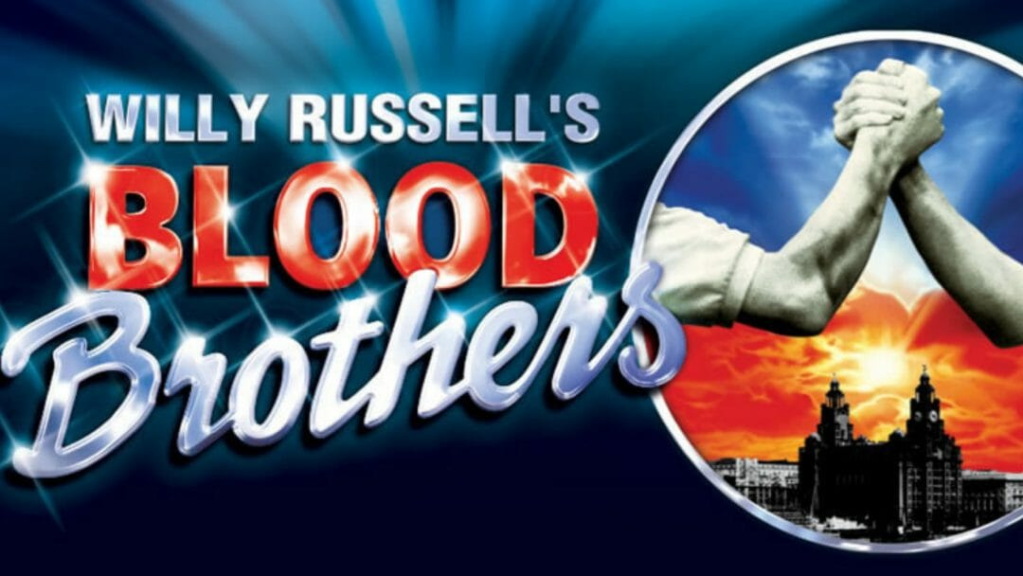
Blood Brothers tells the story of twins, Mickey and Eddie, who are separated at birth, and live very different lives…
Mickey’s brought up in poverty; Eddie’s brought up wanting for nothing. Mickey has no education; Eddie goes to private school and university. Mickey breaks the law; Eddie upholds the law. Mickey marries Linda; Eddie has an affair with Linda…
There’s issues of mental health and drug dependency… the repeated tragic theme of inevitable fate ends with them both dead.
A number of very well-behaved school parties were in the audience; it’s a standard GCSE text. There will be discussions and essays about why the tragedy occurred. Reasoned differences of opinion will be encouraged to develop understanding.

Jonathan Swift was an author and Anglican cleric. In Gulliver’s travels (1726) he said: ‘Religious arguments are as foolish as arguing about which end an egg should be opened.’
‘Difference in opinions has cost many millions of lives: for instance, whether flesh be bread, or bread be flesh; whether the juice of a certain berry be blood or wine.’

Some years ago, our friend Bob visited our church. We’d been through some times of differing opinions. He talked about an instance where Paul and Barnabas were in ‘sharp dispute and debate’ with other Christians…
Bob concluded from the example of Paul and Barnabas that differences of opinion can be used positively to bring people together for the common good: ‘Conflict is an opportunity to create community’.
I think he’s right… but I’m still musing on that one.
 malcolmsmusings.org
I’m always amazed at the amount of energy wasted by two people who realize they’re in violent agreement.
LikeLiked by 1 person
Sadly, it’s true, Grant, – from the personal to the international level
LikeLiked by 1 person
If people are in conflict, they disagree. If they’re in disagreement, they’re not likely to play nice-especially if their beliefs are from indoctrination and not research. Thanks for the interesting topic, Malcolm.
LikeLiked by 1 person
I agree, Nancy. It is interesting. Differences are inevitable – Perhaps if they define our identity, they’re desirable. It’s how we deal with them that requires both conviction and humility.
LikeLiked by 1 person
Perhaps we could all learn to “disagree well”? Interesting phrase🤔
LikeLiked by 1 person
I’m still trying to learn, Lynn!
LikeLike
I’m still musing on that one too…
LikeLiked by 1 person
I am too, Wynne. I think it would need wisdom and determination in many cases… but I like the narrative that demonstrates that it is possible!
LikeLike