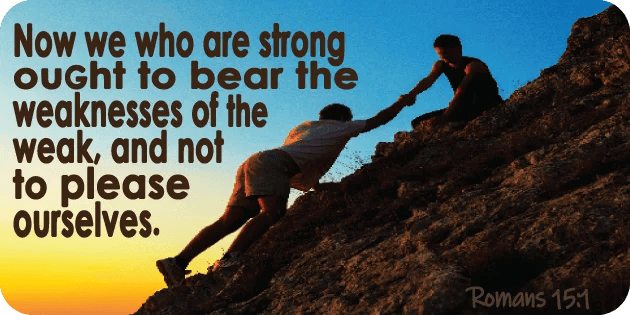
This morning I read St Paul’s words: ‘We who are strong ought to bear with the weakness of the weak and not to please ourselves.’
It’s easy to say that supporting each other is a good thing… but it goes against a society that encourages me to look after myself, consider my needs, put myself first.
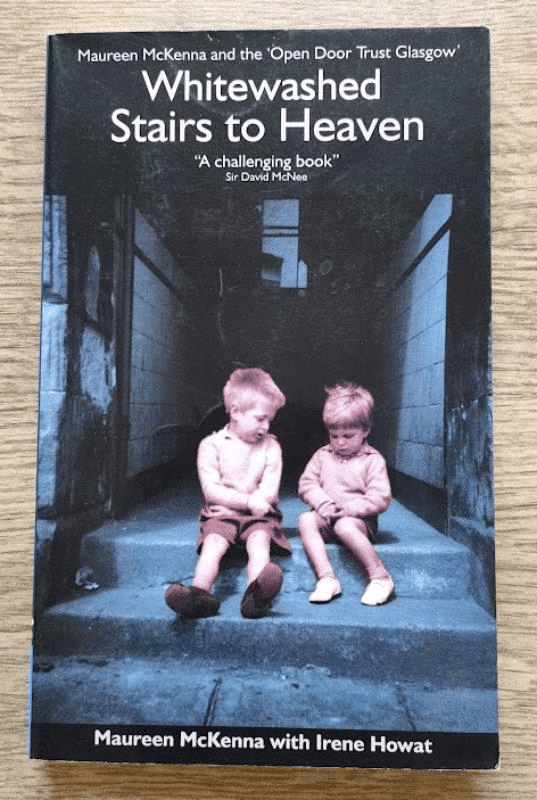
Yesterday I was reading ‘Whitewashed Stairs to Heaven’. Maureen McKenna tells her story. Growing up in poverty, in Glasgow, she’s forced to stand up for herself. She’s involved in a long abusive relationship and becomes an alcoholic…
Joining Alcoholics Anonymous she meets and marries Hugh, comes to a strong Christian faith and turns her life around. Together they work on the streets of Glasgow with the homeless, alcoholics, prostitutes, drug addicts and criminals. They provide food, open safe night refuges, and establish a clinic…
We all like the principle of helping others; I’ve told Jesus’ story ‘The Good Samaritan’ many times. The wounded man, ignored by the good and religious, helped by the stranger, is a good story, with good lessons… but it’s too easy to approach the story rationally and apply physical, social, financial or practical limits as to what such help would look like for us.
Maureen obtained the services of Jenny, a chiropodist, for those who walk the streets each day: ‘Because they wore second-hand and usually ill-fitting shoes, their feet got into a terrible mess… It was a moving sight to see one of our volunteers… gently prising the shoes off an old man’s feet, sometimes the first time they had been off in weeks, and washing his feet tenderly before Jenny applied her services to them. Never, despite the stench, did I see either of them react distastefully. Both did what they did with compassion.’
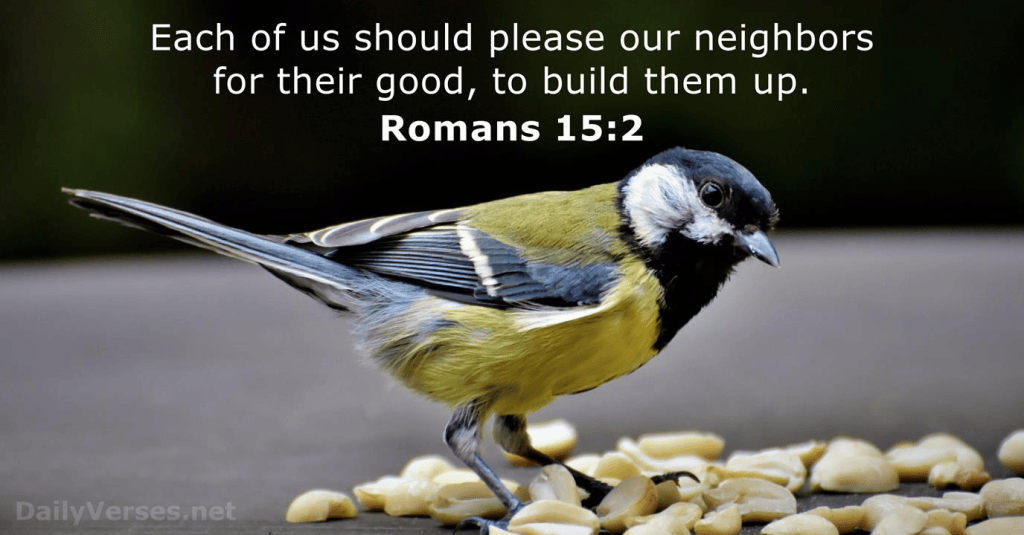
St Paul continues: ‘Each of us should please our neighbours for their good, to build them up.’ This morning I’m musing on my preferences and prejudices, setting limits in ‘building up my neighbour’… Would I wash old men’s feet tenderly, with compassion?

