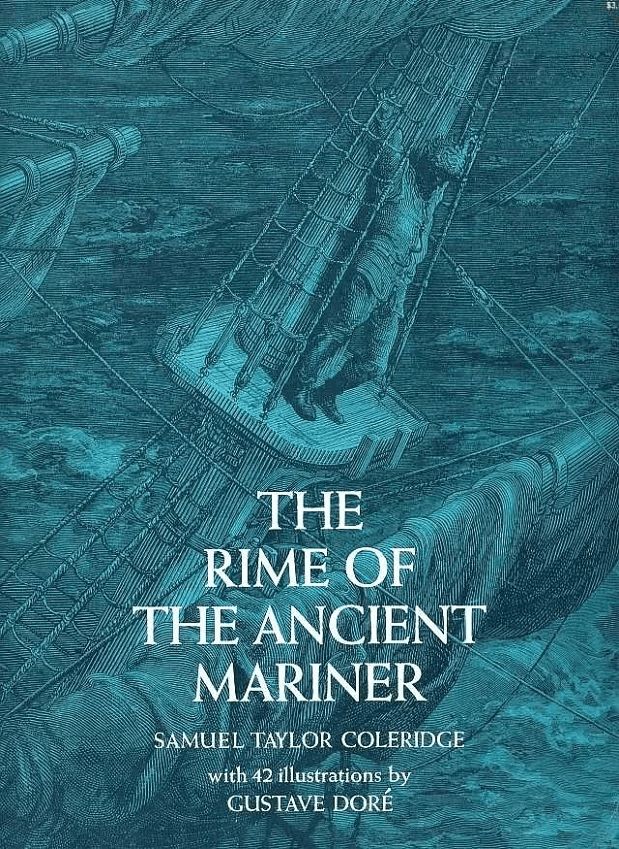
Reading Coleridge’s ‘The Rime of the Ancient Mariner’ I’ve come to the famous lines:
  Day after day, day after day,
     We stuck, nor breath nor motion;
     As idle as a painted ship
     Upon a painted ocean.

     Water, water, every where,
     And all the boards did shrink;
     Water, water, every where,
     Nor any drop to drink.
The sea’s calm. There’s no wind. The ship is motionless. The mariner is helpless, without fresh water, surrounded by undrinkable salt water.
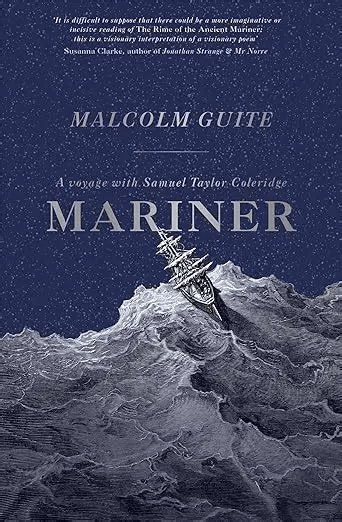
Malcolm Guite, in his commentary, writes of the figurative meaning of the words – first relating them to Coleridge’s addiction to opiates, then to modern consumerism; we’re surrounded by material possessions that fail to bring satisfaction or contentment.
Yesterday morning at church, we were thinking of those without fresh water or hygienic toilets. A verse from Deuteronomy 23 was read that I’ve never heard in church before: ‘Designate a place outside the camp where you can go to relieve yourself. As part of your equipment have something to dig with, and when you relieve yourself, dig a hole and cover up your excrement.’
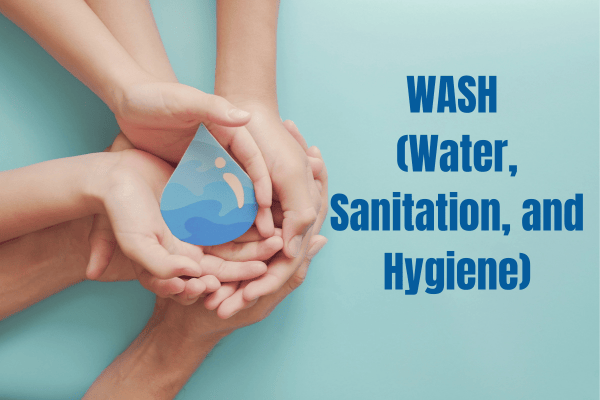
We considered WASH (Water, Sanitation, and Hygiene) projects that provide communities with clean drinking water, decent toilets, and good hygiene. Statistics were read of the thousands of children that die… We were reminded – Water, water isn’t everywhere.
When Jesus met the Samaritan woman at the well, there was talk of thirst and drinking water from the well. The woman’s five husbands and current partner were part of the conversation…
Jesus then talks about ‘living water’. Somehow the literal and metaphorical… the Mariners undrinkable seawater, Coleridge’s addictions, our unsatisfying possessions, third-world toilets, the Samaritan woman’s marital history, and me in Lowestoft this morning come together.
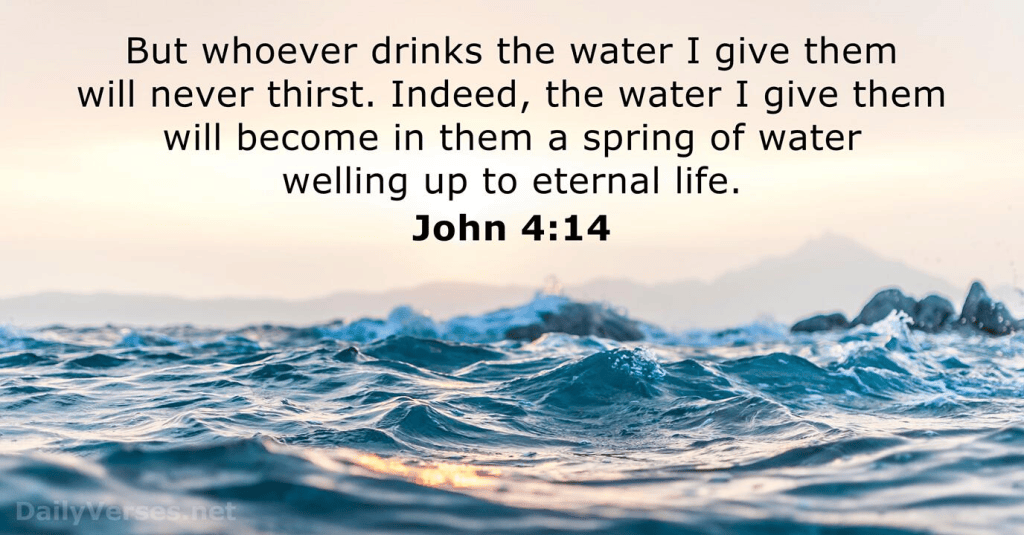
Jesus says, ‘Everyone who drinks this water will be thirsty again, but whoever drinks the water I give them will never thirst. Indeed, the water I give them will become in them a spring of water welling up to eternal life.’
And that’s water, water, everywhere.


In my Bible it says: “And thou shalt have a paddle upon thy weapon, and it shall be, when thou wilt ease thyself abroad, thou shalt dig therewith, and shalt turn back and cover that which cometh from thee.”
I think I prefer your more recent translation.
Two thoughts; one, why did the Jewish people carry paddles through the desert and two, I think the Pentateuch teaches excellent health & Hygiene.
As per usual Malcolm your musings generate more thought for me.
It made me think about the Jewish ban on the consumption of pork. I’m sure I heard or read years ago that the exodus wasn’t quite as described in the Bible and that the tribe split and went two ways. One group went where it was decided that pigs were OK to eat and the other group that they weren’t.
I know the Pentateuch is accepted as part history and part fables by the Jewish academic establishment. I wish I could remember now where I heard the pig statement.
Also, further down in Deuteronomy 23 we have the Laws Concerning Usery. When I played Shylock, I remember researching and discovering that Christians were not permitted to lend upon Usery in 16th century Venice. I see in Deuteronomy 23:20 that jews were allowed to lend to “a stranger” (a Christian?) but not “thy brother”. Are Christians obeying this Old Testament Law or reflecting a more altruistic nature as posited by Christian beliefs?
Discuss, if you have time with your Wickerlike travels.
LikeLiked by 1 person
I guess, Alan that if they were travelling in the desert they carried all that they need for life – including all needed for setting up a camp. There were various time when there were times of division in Genesis… Abraham and Lot, Isaac and Ishmael, Jacob and Esau, so parts of the family went in different directions and didn’t receive the 10 commandments and the law… And the various Deuteronomy laws – like the lending laws – were written, I believe, for their life in community.
LikeLike
In fact, we were watching Little Dorrit last night, for about the sixth time at least. The Dorrits had inherited all the money owed them and were now living in Venice. They were at one of the wonderful Masked Balls and a gondola went past playing chamber music and it reminded me of the absolutely beautiful music written in the 17th and18th centuries.
I don’t think we have such genius alive nowadays. I know Britten is held up as a consummate composer of our times. But, I don’t find his music as emotionally moving as Mozart, Bach or Haydn.
A woman who comes to our play-reading group writes poetry more than plays. She now sets them to music using AI. Believe me Malcolm they are the most beautiful productions. She says she usually has to make ten or so small adjustments, but the finished product is wonderful. I find it a complete dichotomy. Wonderful that such beautiful music can be created using AI but also so dangerous as, why pay for musicians once the public accepts these as pieces of legitimate music.
Actually, during our lifetimes, IT has completely wiped out the need for many jobs.
Talking, or writing, about the bad face of AI. We’re told regularly that our voices can be cloned and people can be hoodwinked into giving money to would be relatives. We now have agreed a family safe and unique word. So, if anyone called and said they were one of us all we need to say is “What is our unique word”. A brilliant tip I got from Nextdoor.
LikeLiked by 1 person