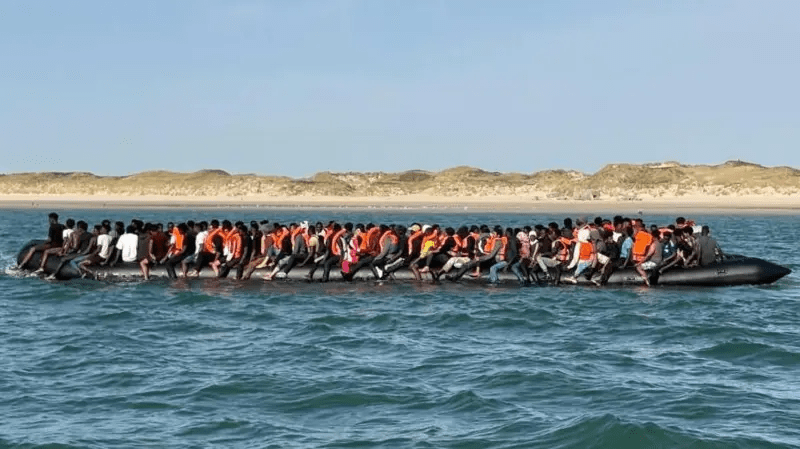
Yesterday’s news showed a small boat crossing the English Channel, arriving in the UK early Monday morning carrying 230 people…
Some friends, with strong, clear opinions, say that we should close our borders, turn back all immigrants, protect our England.
Others say – just as passionately – that we should welcome the refugee, show compassion to the dispossessed, make space for the needy.
Others don’t watch the news. If there’s a problem we don’t want to know about it; it’s beyond our interest, control or responsibility.
Yesterday I read August’s ‘Premier Christianity’. Two respected Christians, Krish Kandiah and Nigel Scotland, share their differing perspectives on immigration… Four thoughts:
Extremes don’t help: Like so many issues in politics, faith and life, we’re often presented with polarised, extreme views that we have to choose between. We choose compassion or control; we welcome or send away. We claim the high ground; our opponents claim their high ground. We discover an uncrossable valley between us…
Embracing both perspectives: The extreme argument is always the easy argument, turning a complex issue into a simplistic choice. Krish Kandia says: ‘Compassion and control are not opposites. They are partners. If our borders have control without compassion, they become a cold and heartless weapon. If they have compassion without control, they undermine the sanctuary and security they are responsible for.’
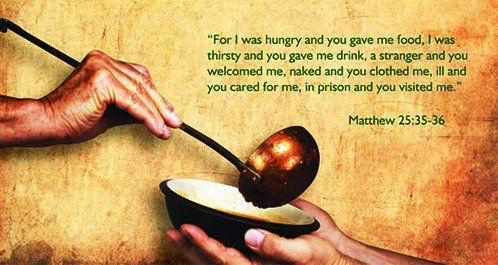
Emphasising compassion: Some years ago, I was chatting to a Christian friend about sexuality, church and inclusion. We concluded that we might get it wrong, but we’d rather err on the side of compassionate than ‘rightness’. Whatever view I take I must retain compassion for both the homeless or persecuted seeking admission, and for those already here whom I’m seeking to protect.
Engaging personally: It’s easy to be an armchair critic; we shut our doors and distancing ourselves from ‘the problem’. We say who’s to blame for the mess we’re in; we say what others should do to put things right. The question is, how do I, perhaps in some small way, get involved?


I don’t think there can be any subject to cause one to have an inner dichotomy more than migration.
I know that I, like most British who were born in the southeast of England, are about 20% Irish, 20% Scandinavian (Swedish now in my case it seems) and the rest southeast England. I also have a little bit from family members on both sides marrying a Jewish person.
Whenever I have been in hospital, much more recently lately unfortunately, the majority of the staff I see around me are originally migrant. We know that many farms and businesses rely upon migrant labour. Unfortunately, people are too ready to call anyone who is obviously born of migrants a migrant. I like to believe that if someone is born in this country, they are British.
However, lots of young men arriving from France, who have travelled through other non-hostile countries, cannot be accepted. If the countries they originally came from were dangerous one is bound to ask why they didn’t perhaps think to bring their wives, sisters, mothers or any other vulnerable person with them.
Having a son-in-law who was a serving army officer and who knows of many servicemen who became homeless on discharge, I am bound to understand why they feel aggrieved when these fit young men are given rent-free accommodation, free mobile phone and £40 per week pocket money.
The number of illegal migrants entering the UK by boat and other means has decreased over the last year. So, one must hope that Shabana Mahmood is having a positive effect.
I have just looked up what requirements would-be, legal, immigrants need.
Meeting Visa Rules
Skill Level: The role must generally match Regulated Qualifications Framework (RQF) Level 6 (professional or degree level).
Salary Threshold: Meet the baseline general salary requirement of £41,700 or the specific “going rate” for that job code.
English Language: Pass a secure English language test at CEFR Level B2 or higher for reading, writing, speaking, and listening.
Sponsorship: Receive a valid digital Certificate of Sponsorship (CoS) reference number from your employer before submitting your formal visa
Am I being daft in thinking they seem a wee bit tough? Answers on a postcard please.
Discuss.
LikeLiked by 1 person
Thanks for your contribution, Alan… And my perspective also includes a Brazilian son-in-law who has recently jumped through the necessary hoops to be granted British citizenships.
LikeLike
The world has a problem, but instead of working together, every country is trying to solve it individually. Over 100 million people are forcibly displaced or had to flee. They have simple wished, to live, to work, to eat, to live in peace (which sadly is often an illusion).
Borders won’t solve the problem. We have blood on our hands—all of us. We are a selfish bunch, all of us. Interestingly enough, these borders, walls and limitations don’t exist for the rich. They can go where they want to. It’s us, the average person, who doesn’t have this luxury. We have to fight for everything. For simple survival sometimes.
LikeLiked by 1 person
It’s easy to see the problem, easy to have an opinion and direct the blame or responsibility. The question to me is ‘what should I do?’
LikeLiked by 2 people
You could start voting right, I suppose. But it’s really not up to the single individual. It’s a global issue that needs a global solution because it will get worse.
LikeLiked by 1 person
The four E’s – great suggestions for how to lean in to the tough issues. Thanks, Malcolm!
LikeLiked by 1 person
I guess that’s as far as I got this morning, Wynne… trying to with and engage with a complex issue that in my experience creates more heat than light!
LikeLike