Yesterday we visited the National Memorial Arboretum in Staffordshire. Covering 150 acres, it includes 430 memorials, each dedicated to particular aspects of the armed forces, emergency services or civilian organisations. I will especially remember five of the memorials…
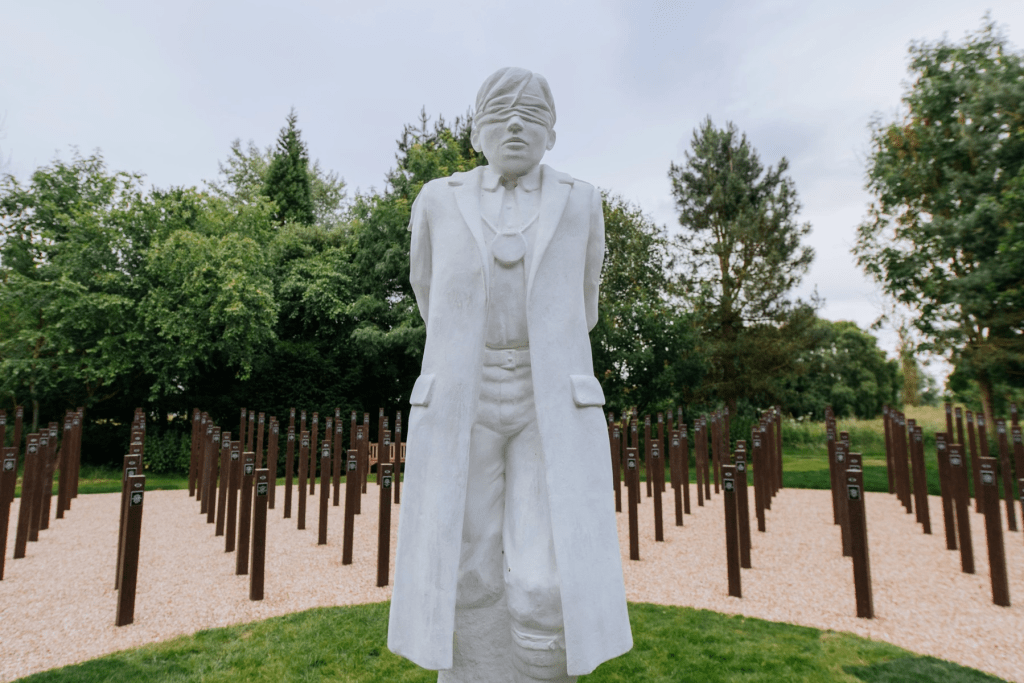
The Shot at Dawn Memorial commemorates the 309 men that were executed for desertion and other capital offences during World War I, men who had seen the horrors of war and suffered physically and psychologically. A statue of a blindfold, bound man stood in front of 309 named posts. Some read, ‘Age Unknown’ because they were under eighteen…
The Sapper Support Memorial bears the inscription: ‘To give families and friends a place to reflect and remember those who have left us after battling with Post Traumatic Stress Disorder (PTSD) and other associated mental illnesses.’ We know a couple of young men, involved in recent conflicts who are suffering with PTSD.
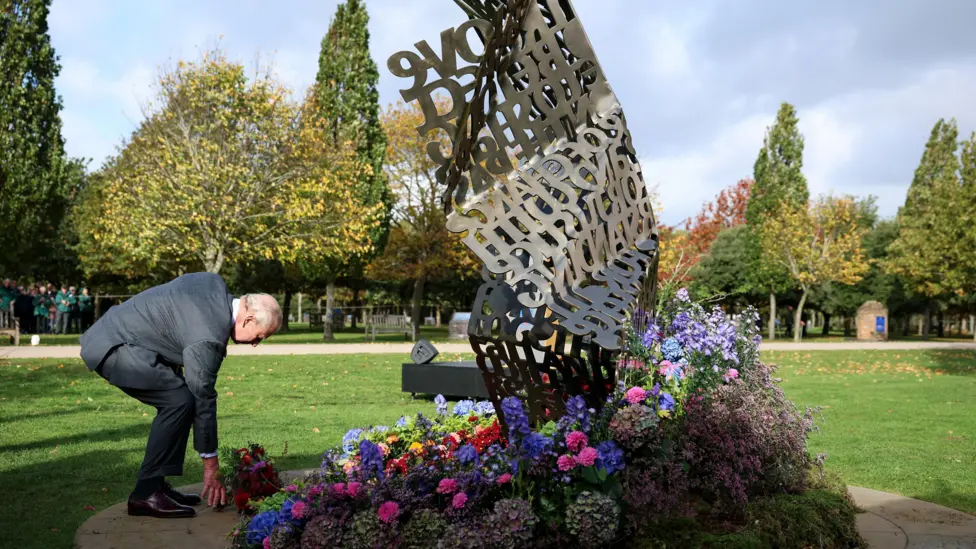
The Memorial to LGBT Veterans is dedicated to those who served at a time when it was illegal to be gay in the military, as well those now serving in the forces. The sculpture resembles a crumpled piece of paper containing words, ‘love, inclusion, respect…’ from personal letters which were used as evidence to incriminate people.
The Garden of the Innocents is a memorial to children who are victims of war and terrorism. Raised beds, shaped like jigsaw pieces that don’t fit together, reflect children’s confusion and bewilderment… An annual blossom cutting ceremony from the central ‘Anne Frank’ elder tree ensures that it never bears fruit, just as Anne was prevented from reaching maturity…
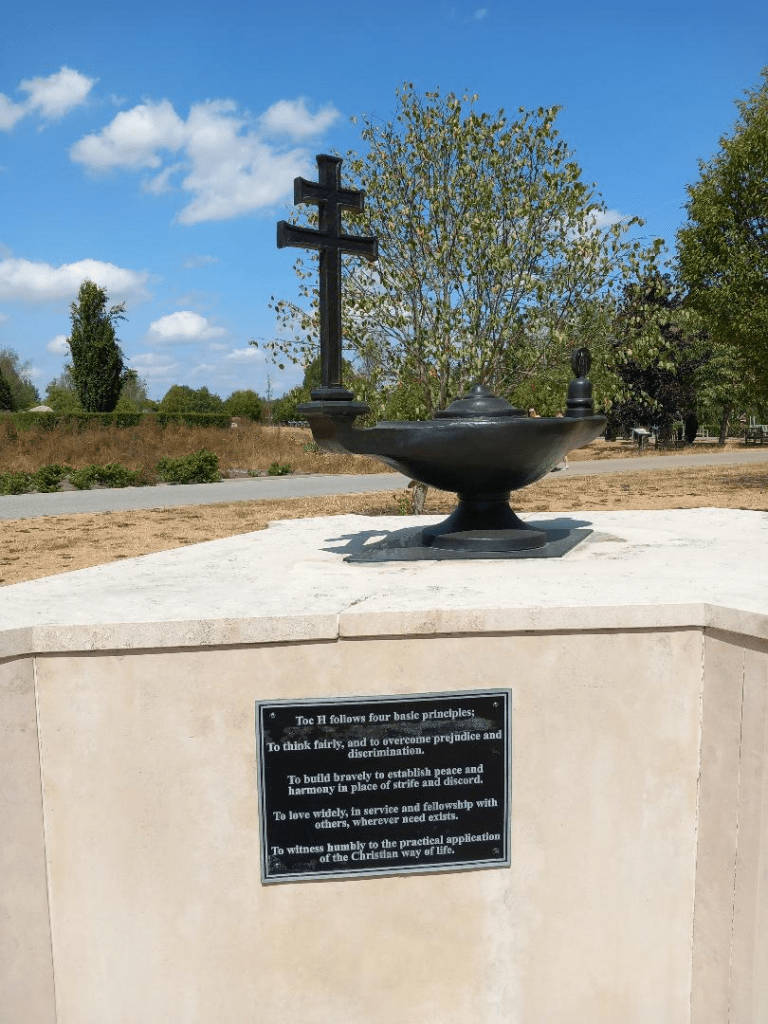
The Toc H Memorial remembers the Christian service charity, set up by an army chaplain in 1915. The Toc H principles were stated:
‘To think fairly, and to overcome prejudice and discrimination. To build bravely, to establish peace and harmony in place of strife and discord. To love widely, in service and fellowship with others, whatever need exists. To witness humbly to the practical application of the Christian way of Life.’
It was a good epilogue.


Yes, Malcolm, we find the National Memorial Arboretum very moving when we visit.
I was particularly interested in the last memorial you featured because – as you may know – I have been a member of Toc H since I first got involved with their summer project programme at the age of 16. I volunteered over the years at children’s playschemes, conservation projects and with what were then called “mentally handicapped” children and adults (now under the broader banner of “Special Needs”). When I went to University I joined a Toc H branch in London, and for my final year of training I lived in a Toc H hostel near the Tower of London (the hostel’s cook was the wife of a Beefeater at the Tower). After my return to East Anglia I arranged and/or led a number of summer projects and I was a member of the Gorleston branch until its closure. Toc H is now, sadly, a shadow of its former self – although it still does very good works none of them are in this area, and so I am now a ‘general’ member of the movement.
Martin
LikeLiked by 2 people
Thanks for sharing that, Martin. I don’t think I knew the details of your Toc H involvement before. It was good, amongst all of the other memorials – submariners, parachutists, bomb disposers etc there was an explicitly Christian presence – as there was in the chapel.
LikeLike