
Yesterday I visited my friend Paul in our local hospital – the ‘James Paget University Hospital’.
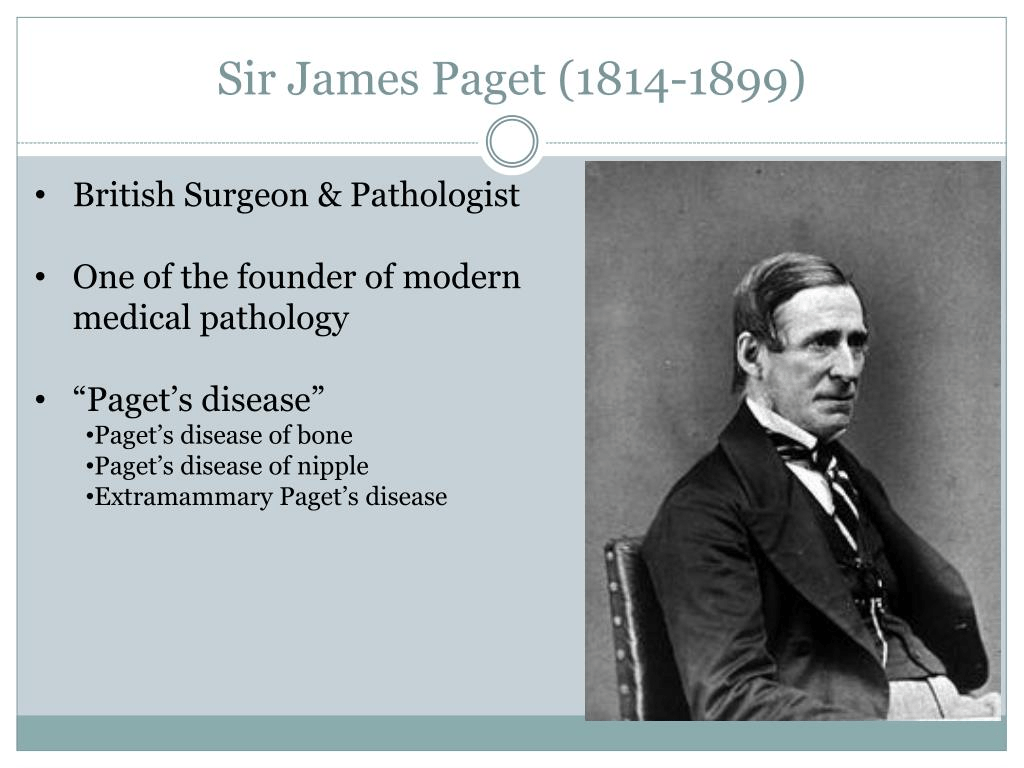
James Paget was a local boy. Born in Great Yarmouth in 1814, Paget studied medicine in London. Studying the cause of diseases, he became one of the greatest surgeons and pathologists of his day. Wikipedia tells me that ‘Paget’s greatest achievement was that he made pathology dependent, in everything, on the use of the microscope, especially the pathology of tumours.’
The word pathology comes from two Greek words ‘Pathos’ meaning ‘suffering’ and ‘logia’ meaning ‘study of’… Paget the pathologist, studied suffering…
As I visited Paul, as my inexpert eyes scanned beds and patients I was aware that here were people who were suffering. There were folks suffering with particular physical conditions. In the bed next to Paul’s was a gent whose mental state appeared significantly disturbed…
In my conversation with Paul, we talked about loneliness… folks taken from their homes and all that they’re familiar with, having to share a room with strangers… I reflected on that aspect of hospital life that compounds physical suffering…
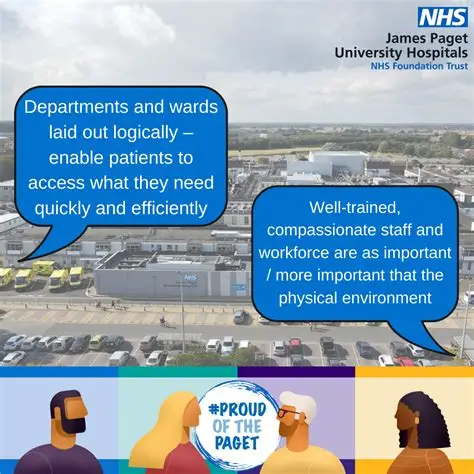
Yesterday at ‘The Paget’ I was impressed by the caring cheerfulness of the staff. I often am. Paul talked about staff who had talked to him yesterday about his needs – the surgeon, physiotherapist, occupational therapist… I watched and listened as staff talked to each other and to patients. I observed a sense of supportive teamwork, a demonstration of skill, an understanding of need… and a sense of compassion.
The word compassion comes from two Latin words ‘com’ meaning ‘with’ and ‘passion’ meaning suffering. If the staff I observed yesterday were compassionate there was empathy; they were suffering with their patients.
At The James Paget Hospital pathology meets compassion. A pathologist gives his name to a hospital with compassionate staff. Knowledge about suffering meets empathy with suffering.
And me? Each day I see people suffering. I’m challenged to move from knowing about suffering to understanding suffering, and from understanding suffering to feeling the suffering of others.


Beautiful, Malcolm. My prayers are with your friend and others suffering. I lifted them now. I’m so thankful for the intersection of compassion and pathology in my diagnosis and care.
I’ve known myself to be compassionate my entire life. As a young girl, I felt for others. Now, I truly have empathy and that compassion allows me to express Christ’s love~ although some easier than others.
Suffering with Christ has been the sweetest thing I’ve ever known.
LikeLiked by 1 person
Thanks Karla. I think that it’s through our own suffering and life experiences that we are able to increase our ability to understand empathise. In this way some would say that suffering is a gift…
LikeLiked by 1 person
It’s my blessing, Malcolm. Suffering has been a gift to me. I wouldn’t change it!
LikeLiked by 1 person
That’s some appreciation, Karla! Thanks for sharing it.
LikeLiked by 1 person
It’s my blessing!
LikeLiked by 1 person
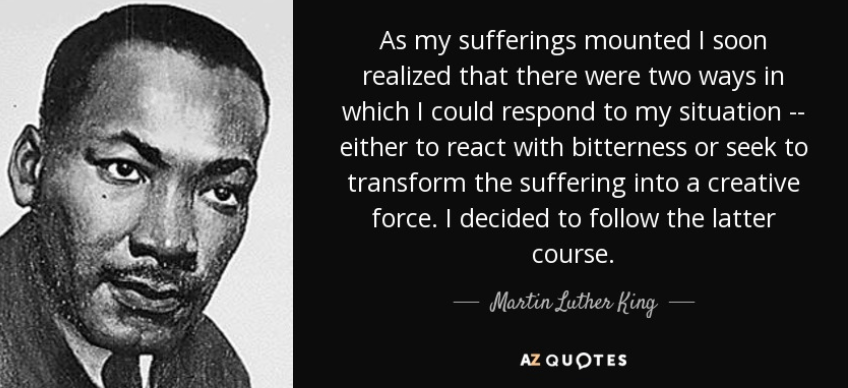
Excellent, another hero on our doorstep. And Jack said he has tried both MLKs responses, the latter is definitely the better, if a little harder to pull off xxx
LikeLiked by 1 person
Yes, John. It would seem that he had a strong Christian faith and was a mate of Charles Darwin.
LikeLike